
Olepolos is a rural area located in Kajiado County, in southern Kenya, on the slopes of the Great Rift Valley. The region is predominantly semi-arid, characterised by open plains, rocky ground and scattered vegetation. Rainfall is low and unpredictable, with long dry seasons that place constant pressure on water sources.
The local economy is largely based on small-scale farming, livestock keeping and community institutions such as churches and schools, all of which depend heavily on reliable access to water. When rains fail or water storage is insufficient, communities are quickly affected — making sustainable water harvesting and storage essential for daily life.
The local economy is largely based on small-scale farming, livestock keeping and community institutions such as churches and schools, all of which depend heavily on reliable access to water. When rains fail or water storage is insufficient, communities are quickly affected — making sustainable water harvesting and storage essential for daily life.
The community used to rely on a water supply at a natural spring about 3 km from the church site. As the water flowed from the spring it gathered into a large pool. However, this pool was highly contaminated with leeches and if they were scooped up with the water during collecting they caused serious illness to both people and livestock. This was a major danger to the whole community.
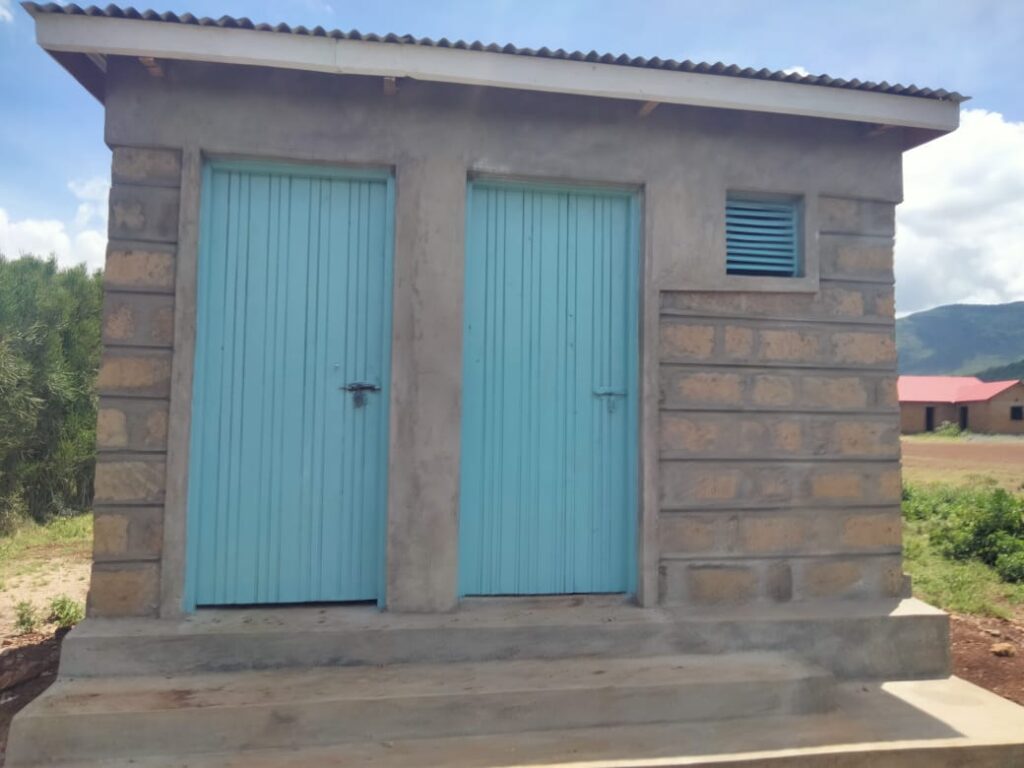
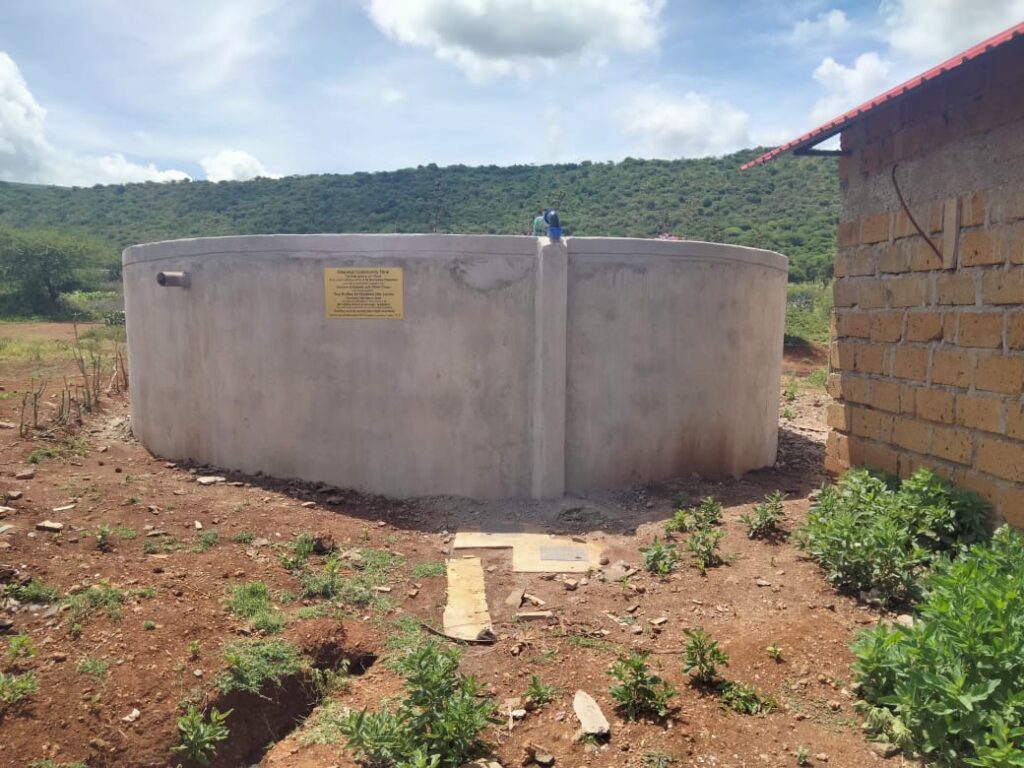
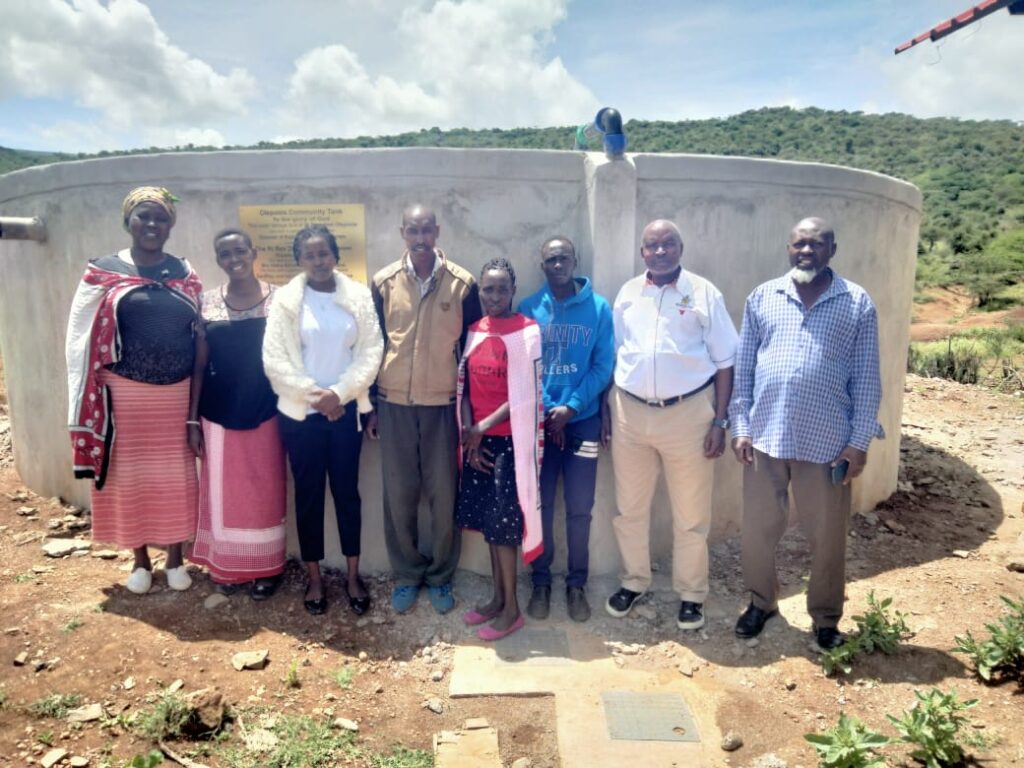
The project involved the construction of a 100m³ (100,000-litre) water storage tank to provide a reliable water supply for the entire Olepolos community. The tank now receives water from the newly completed church building and is ready to receive rain water during the expected rains in April/May this year. The water distribution is entirely operated by a community committee and is open 5 days every week. In line with Water Drops’ commitment to the UN’s WaSH (Water, Sanitation and Hygiene) standards, the project also includes the construction of a pit latrine along with a community health and hygiene training day, delivered by the Diocese, to promote best practices in sanitation and water use.
Construct a 100m³ water storage tank
Place the tank beside the church so that gutters and a down pipe can be fixed to harvest rainwater
Implementation of the UN WaSH element
Total Cost
£14,000
Water is essential for health, dignity and opportunity. By combining water storage, sanitation and training, this project will deliver lasting benefits and help the community build resilience to future water shortages.