
Olkiramatian sits on the floor of the Great Rift Valley in southern Kenya. It is a harsh, semi-desert place where daytime temperatures climb towards 40°C and only around 300mm of rain falls in a year. There is no surface water, the little that gathers after the rains soon evaporates in the heat, and the nearest lake, Magadi, is too caustic to use. For the families who live here, finding clean water is the single biggest challenge of daily life.
At the centre of the community is the Olkiramatian Development Centre, set up by the Anglican Church of Kenya in the 1970s to support local families through training, education and farming. Around 1,400 families – more than 8,000 people – live in the area, and a pipeline built at the time still carries water from a river some 60 miles away on the escarpment of the Rift Valley, cared for by the community ever since.
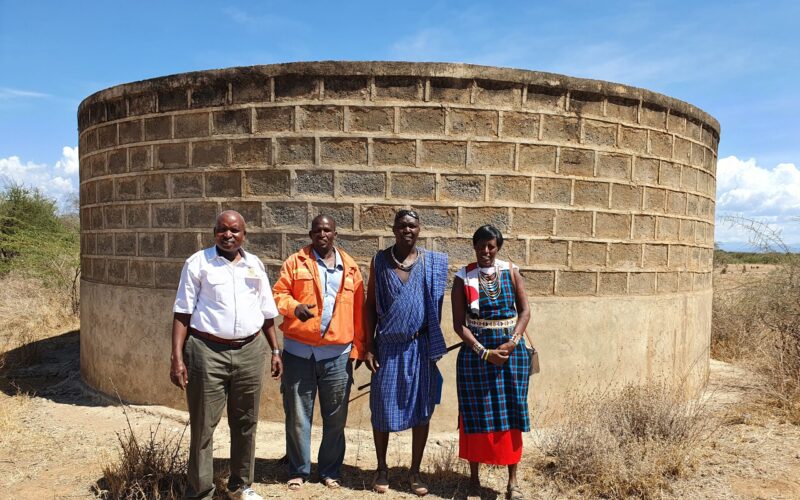
But life here is changing. The Group Ranch this community has shared for generations is being divided into individual holdings, which means projects meant to serve everyone must now sit on designated public land – usually a church, school or health centre. The Development Centre has all three, so it will become the main hub for the area’s future.
That future is already taking shape. The Diocese of Kajiado has partnered with Compassion International, which walks alongside children and their families to help them overcome the challenges of poverty. 180 children under the age of seven have already been registered, with their programmes due to begin in August 2026.

The plan, in three parts
Securing the supply
Repairing the existing pipework, cleaning and restoring the high-level steel storage tank, and fencing the compound to keep it secure.
Harvesting the rain
It may not rain often, but when it does, it falls heavily. Fitting gutters and catchment tanks to the Centre's buildings means none of it is wasted. Two houses will be repaired first and rented to local teachers and Compassion staff — income that helps the Centre maintain itself.
Putting water to work
A community draw-off point will give people a place to collect clean water, and a half-acre kitchen garden — a shamba — will grow fruit and vegetables for the Centre and to sell locally, fenced to protect it from livestock and wildlife, elephants included.
This is a chance to reimagine what this Centre can be — a place that invests in the future of every child growing up across this corner of the Rift Valley.